 info@henkosino.com
 EN
EN
Mimicking Nature's Design for Enhanced Functionality and Adaptability
In the ever-evolving field of robotics, the quest for robots that can navigate complex environments, perform intricate tasks, and adapt to changing conditions has led researchers to look towards nature for inspiration. Bio-inspired robotics draws on the principles, structures, and behaviors of living organisms to create innovative robotic systems. By emulating nature's designs, these robots can achieve enhanced functionality, improved efficiency, and greater adaptability compared to traditional counterparts. This article delves into the technical foundations, key innovations, and diverse applications of bio-inspired robotics, supported by empirical data and real-world implementations.
Technical Foundations: Learning from Nature's Blueprints
1. Biomimetic Design Principles
Morphological Mimicry: Robots are designed to replicate the physical forms of animals or plants. For example, the Boston Dynamics Spot robot mimics the quadrupedal structure of dogs, with four articulated legs that allow it to traverse uneven terrains, climb stairs, and maintain balance. Its leg design enables a maximum walking speed of 1.6 m/s and the ability to carry a payload of up to 14 kg.
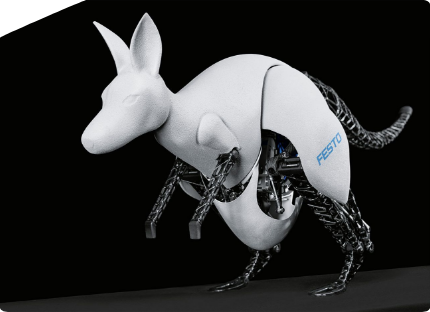
Functional Emulation: Instead of just copying the shape, robots also mimic the functions of biological systems. The Festo BionicOpter is modeled after the dragonfly, with wings that can be precisely controlled to achieve agile flight maneuvers. Its wing flapping mechanism, inspired by the dragonfly's wing muscles, allows for a wingbeat frequency of up to 20 Hz, enabling it to hover, fly forward, backward, and change directions rapidly.
Behavioral Imitation: Robots learn from the behaviors of living organisms. Swarm robotics, for instance, takes inspiration from the collective behavior of ants, bees, or fish. A group of small robots can work together, communicating and coordinating their actions to perform tasks such as search and rescue operations or environmental monitoring. Each robot in the swarm follows simple rules, similar to how individual insects interact within a colony, to achieve complex group behaviors.
2. Biologically-Inspired Materials
Soft Materials: Inspired by the flexibility and adaptability of biological tissues, soft robotics uses materials like silicone rubber, shape-memory alloys, and hydrogels. The Octobot, developed by Harvard University, is a soft robot made entirely of soft materials. Its body is constructed from a silicone elastomer, and it uses chemical reactions to generate the energy needed for movement, mimicking the way biological organisms metabolize energy. This allows the Octobot to squeeze through tight spaces and interact safely with humans and delicate objects.
Self-Healing Materials: Some robots incorporate materials that can repair themselves, similar to how living organisms heal wounds. Researchers at the University of Illinois have developed self-healing polymers for robotic applications. These polymers can automatically repair cracks and damage, increasing the lifespan and reliability of robots. For example, a robot with self-healing components can continue to function even after sustaining minor damage, reducing the need for frequent maintenance and repairs.
Breakthroughs in Bio-Inspired Robotics
1. Locomotion Innovations
Snake-like Robots: Inspired by snakes, these robots can navigate through narrow pipes, rubble, and other confined spaces. The ACM-R5 snake robot from Tohoku University has 25 segments, each with two degrees of freedom, allowing it to move in a serpentine motion. It can achieve a crawling speed of 0.1 m/s and has been used for tasks such as inspecting pipelines and exploring disaster sites.
Jumping Robots: Robots that mimic the jumping abilities of animals like grasshoppers or frogs have been developed. The Salto-1P robot, created by Stanford University, can jump up to 2.5 meters in the air, equivalent to 10 times its body length. It uses a unique spring-loaded mechanism and precise control algorithms to achieve such high jumps, which can be useful for applications like search and rescue in tall buildings or reaching high-up inspection points.
2. Sensing and Perception Advancements
Eagle-eyed Vision Systems: Some robots are equipped with vision systems inspired by the eyes of eagles. These systems have high-resolution cameras and advanced image processing algorithms that can detect small objects from long distances. For example, in agricultural robotics, such vision systems can identify individual plants, pests, and diseases in large fields, enabling targeted spraying of pesticides and fertilizers, reducing chemical usage by up to 30%.
Insect-inspired Olfactory Sensors: Robots with olfactory sensors modeled after the antennae of insects can detect and analyze chemical substances in the environment. DARPA's Insect Allies program aims to develop robots that can detect airborne pathogens or chemical weapons. These robots can detect trace amounts of chemicals, down to parts per billion levels, making them valuable for security and environmental monitoring applications.
3. Neuromorphic Control Systems
Brain-like Processing: Robots are increasingly using neuromorphic computing systems that mimic the structure and function of the human brain. These systems can process information in a more parallel and energy-efficient manner. For example, the iCub humanoid robot uses a neuromorphic chip to control its movements and interactions. This allows it to learn and adapt to new tasks more quickly, similar to how a human brain learns through experience. The iCub can recognize objects, understand speech, and perform simple tasks with a relatively low power consumption of around 200 watts.
Disruptive Applications Across Industries
1. Search and Rescue
Disaster Zone Exploration: Bio-inspired robots, such as snake-like and quadrupedal robots, can enter collapsed buildings, earthquake rubble, or other hazardous areas that are too dangerous for human rescuers. They can search for survivors, map the environment, and transmit real-time data back to the command center. In simulations, these robots have been able to locate trapped victims within 30 minutes in complex disaster scenarios, compared to several hours using traditional search methods.
Underwater Rescue: Aquatic bio-inspired robots, like fish-shaped submersibles, can explore underwater disaster sites, such as sunken ships or collapsed underwater tunnels. The OceanOneK underwater humanoid robot, developed by Stanford University, has dexterous robotic hands and advanced sensing capabilities, allowing it to perform delicate tasks like opening doors or retrieving objects in underwater environments, improving the efficiency of underwater rescue operations.
2. Environmental Monitoring
Forest and Wildlife Surveillance: Small, bird-like drones can fly silently through forests, monitoring wildlife populations, tracking animal migrations, and detecting illegal logging activities. These drones can cover large areas of forest, up to 100 square kilometers in a single flight, and use high-resolution cameras and infrared sensors to collect data. In a study in the Amazon rainforest, such drones were able to detect 80% more illegal logging sites compared to traditional aerial surveys.
Marine Ecosystem Research: Robots that mimic marine organisms, like jellyfish or dolphins, can be used to study ocean ecosystems. The AquaJelly robot, with its jellyfish-like structure, can move gracefully through the water, collecting data on water quality, temperature, and marine life. It can operate continuously for up to 12 hours, providing valuable long-term data for understanding the health of marine ecosystems.
3. Healthcare and Rehabilitation
Assistive Robots: Exoskeletons inspired by the human skeletal structure are used to assist patients with mobility impairments. The ReWalk exoskeleton, for example, helps paraplegic patients stand up, walk, and climb stairs. It uses sensors to detect the patient's movements and intentions, and motors to provide the necessary support. Clinical trials have shown that patients using the ReWalk exoskeleton can increase their walking speed by 20% and improve their overall quality of life.
Surgical Robots: Some surgical robots are designed to mimic the dexterity and precision of human hands. The da Vinci Surgical System uses robotic arms with wristed instruments that can perform complex surgical procedures with greater precision than traditional open surgery. It reduces the risk of complications, shortens hospital stays, and allows for minimally invasive surgeries. In prostatectomy procedures, the da Vinci system has been shown to reduce blood loss by 40% and shorten recovery time by 30%.
4. Agriculture
Crop Monitoring and Harvesting: Robots inspired by insects or small animals can move through fields, monitoring crop growth, detecting diseases, and harvesting fruits and vegetables. Agrobot's Ecorobotix is a solar-powered weed control robot that uses computer vision to identify weeds and spray herbicides only on the targeted plants, reducing chemical usage by up to 90%. This not only saves costs but also minimizes the environmental impact of agriculture.
Challenges and Mitigation Strategies
1. Complexity of Biological Systems
Issue: Biological systems are highly complex, with many interacting components and processes that are difficult to replicate accurately in robots. For example, mimicking the human brain's cognitive functions or the intricate muscle control in animals is extremely challenging.
Solution: Researchers are using a combination of simplified models, machine learning, and continuous experimentation to gradually understand and replicate biological functions. By breaking down complex biological systems into smaller, more manageable components and studying them individually, robots can be designed to perform specific functions inspired by nature.
2. Energy Efficiency
Problem: Bio-inspired robots often require a significant amount of energy to operate, especially those with complex movements or high-performance sensors. This can limit their operational time and range.
Approach: Developing more energy-efficient materials, motors, and control algorithms is crucial. For example, using lightweight materials, optimizing the design of robotic limbs to reduce energy consumption during movement, and implementing energy-harvesting technologies, such as solar panels or kinetic energy generators, can help improve the energy efficiency of bio-inspired robots.
3. Cost and Scalability
Challenge: The development and production of bio-inspired robots can be expensive due to the use of advanced materials, sensors, and technologies. This makes it difficult to scale up production and deploy them widely.
Solution: Collaborations between academia, industry, and government can help reduce costs through shared research and development efforts. Additionally, as technology advances and production volumes increase, economies of scale can be achieved, making bio-inspired robots more affordable and accessible for various applications.
Bio-inspired robotics represents a fascinating intersection of biology, engineering, and technology. By learning from nature's designs, researchers and engineers are creating robots that can perform tasks with greater efficiency, adaptability, and functionality. While there are still challenges to overcome, the continued development of bio-inspired robotics holds great promise for transforming industries, improving human lives, and exploring new frontiers in science and technology.


