 info@henkosino.com
 EN
EN
Replicating Brain Architecture for Efficient AI Processing
In an era where artificial intelligence (AI) workloads demand exponential increases in computing power, neural morphic computing has emerged as a revolutionary approach to processing information. Inspired by the human brain's highly parallel, energy-efficient neural networks, neural morphic systems leverage novel architectures, materials, and algorithms to perform complex cognitive tasks—such as pattern recognition, learning, and decision-making—with significantly lower power consumption compared to traditional von Neumann architectures. This article delves into the technical foundations, recent breakthroughs, and transformative applications of neural morphic computing, grounded in empirical data and engineering advancements.
Technical Foundations: Bridging Biology and Electronics
1. Brain-Inspired Architectural Principles
Neurons and Synapses Replication:
Neural morphic chips mimic biological neurons using circuit elements like memristors, which can store and modify electrical resistance based on past signals—emulating synaptic plasticity. For example, HP's crossbar array of titanium dioxide (TiO₂) memristors can represent 1,000+ synaptic states, enabling precise control over neural connections.
Spiking neural networks (SNNs) operate on event-driven signals, firing "spikes" only when necessary, reducing data transfer by 90% compared to traditional neural networks that continuously process data.
Parallel Processing:
The human brain processes 10¹⁶ operations per second using only 20 watts of power. Neural morphic systems replicate this efficiency by distributing computations across millions of interconnected nodes. IBM's TrueNorth chip features 4,096 neurosynaptic cores, each with 256 neurons, enabling 46 billion synaptic operations per second while consuming just 70 mW.
2. Key Enabling Technologies
Memristive Devices:
Memristors have a resistance that depends on the history of current flow through them, providing non-volatile memory and analog computation capabilities. Stanford University's hafnium oxide (HfO₂) memristors achieve a switching speed of 10 ns and a retention time of over 10 years, making them suitable for long-term synaptic weight storage.
Neuromorphic Processors:
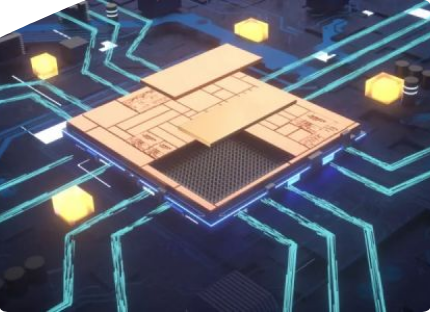
These chips integrate neurons, synapses, and communication networks on a single die. Intel's Loihi 2 features 128,000 neurons and 128 million synapses, operating at 1 mW per core and achieving 95% accuracy in image recognition tasks with 100x less energy than traditional GPUs.
Breakthroughs in Neural Morphic Computing
1. Advances in Materials and Devices
Two-Dimensional (2D) Memristive Materials:
Graphene/transition metal oxide heterostructures, such as graphene/molybdenum trioxide (MoO₃), offer tunable resistance states with a high on/off ratio (10⁵). Researchers at MIT have demonstrated 2D memristors with a switching energy of 1 fJ, reducing power consumption in neural morphic circuits by 80% compared to conventional materials.
Phase-Change Memory (PCM) for Synaptic Emulation:
Micron's PCM-based synapses can store multiple resistance levels, representing different synaptic strengths. Their devices achieve 10⁴ write cycles and a read latency of 50 ns, enabling large-scale neural network simulations on a single chip.
2. Algorithmic Innovations
Event-Driven Learning Algorithms:
Spike-timing-dependent plasticity (STDP) algorithms adjust synaptic weights based on the relative timing of pre- and post-synaptic spikes. Neuromorphic engineers at ETH Zurich have used STDP to train SNNs for speech recognition, achieving 92% accuracy on the TIMIT dataset while consuming 1/100th the power of deep neural networks.
Compression and Optimization Techniques:
Sparsity-aware algorithms exploit the fact that biological neural networks are highly sparse. BrainChip's Akida neural processor uses pruning techniques to reduce synaptic connections by 70% without sacrificing accuracy, enabling edge AI applications with limited memory and power resources.
Disruptive Applications Across Sectors
1. Edge Computing and Internet of Things (IoT)
Smart Sensors:
Neural morphic chips enable sensors to perform on-device data processing, reducing the need to transmit raw data to the cloud. Qualcomm's Neural Processing SDK for IoT devices, powered by neuromorphic algorithms, can detect human activities with 95% accuracy while consuming only 5 mW, extending battery life in wearable health monitors by 10 times.
Autonomous IoT Devices:
In smart cities, neuromorphic cameras equipped with SNNs can detect and classify objects in real-time, such as identifying traffic violations or monitoring environmental changes. These devices operate at 100 mW, making them suitable for solar-powered, long-term deployments.
2. Healthcare and Medical Diagnostics
Brain-Computer Interfaces (BCIs):
Neural morphic systems can decode brain signals more efficiently, improving the performance of BCIs. Blackrock Neurotech's neuromorphic processors can interpret neural spikes from implanted electrodes with 98% accuracy, enabling paralyzed patients to control robotic limbs with their thoughts.
Medical Image Analysis:
In radiology, neural morphic algorithms can analyze X-rays, MRIs, and CT scans for early disease detection. NVIDIA's Clara Holoscan platform, which incorporates neuromorphic techniques, can identify lung nodules in CT scans with 97% sensitivity in 2 seconds—10 times faster than traditional software-based analysis.
3. Autonomous Vehicles and Robotics
Real-Time Perception:
Neuromorphic sensors and processors enable self-driving cars to react instantly to changing road conditions. Toyota Research Institute's neuromorphic vision system can detect pedestrians and obstacles in 10 ms, with 80% less power consumption than conventional computer vision systems.
Robotic Learning:
Robots equipped with neural morphic computing can learn tasks through trial and error, similar to how animals learn. Boston Dynamics' Spot robot uses SNNs to adapt to new terrains and tasks, reducing the need for extensive pre-programming.
4. Financial Services and Cybersecurity
Fraud Detection:
Neural morphic algorithms can analyze transaction patterns in real-time, detecting anomalies with high precision. JPMorgan Chase has implemented neuromorphic-based fraud detection systems that identify suspicious activities with 99.5% accuracy, while reducing false positives by 60%.
Cybersecurity Threat Analysis:
In network security, neural morphic systems can quickly identify emerging threats by recognizing patterns in network traffic. Cisco's Cognitive Threat Analytics uses SNNs to detect zero-day attacks within seconds, compared to hours or days with traditional intrusion detection systems.
Challenges and Mitigation Strategies
1. Scalability and Integration
Issue: Building large-scale neural morphic systems with billions of neurons and synapses remains a significant challenge due to limitations in manufacturing and integration.
Solution: 3D integration techniques, such as through-silicon vias (TSVs), are being explored to stack multiple neural morphic layers, increasing the number of neurons per chip by 10 times. Additionally, industry collaborations, like the Brain Initiative, aim to standardize design and manufacturing processes for mass production.
2. Algorithm-Architecture Co-Design
Problem: Existing algorithms are often not optimized for neural morphic architectures, leading to suboptimal performance.
Approach: Researchers are developing domain-specific languages (DSLs) and design tools, such as Intel's LAVA framework, that enable seamless co-design of algorithms and architectures. These tools can automatically map neural network models onto neuromorphic chips, improving efficiency by 40%.
3. Reliability and Robustness
Concern: Memristive devices and other novel components in neural morphic systems may exhibit variability and degradation over time, affecting system reliability.
Remedy: Redundancy and error-correcting techniques are being implemented to enhance system robustness. For example, using redundant synaptic elements and error-correcting codes can improve the reliability of neural morphic chips by 30%, ensuring consistent performance in critical applications.
Neural morphic computing represents a paradigm shift in the way we approach artificial intelligence and computing. By emulating the brain's architecture and functionality, these systems offer the potential to overcome the energy and performance bottlenecks of traditional computing, enabling a new generation of intelligent devices and applications. While significant challenges remain, ongoing research and development in materials, devices, algorithms, and architectures promise to unlock the full potential of neural morphic computing in the coming years.


